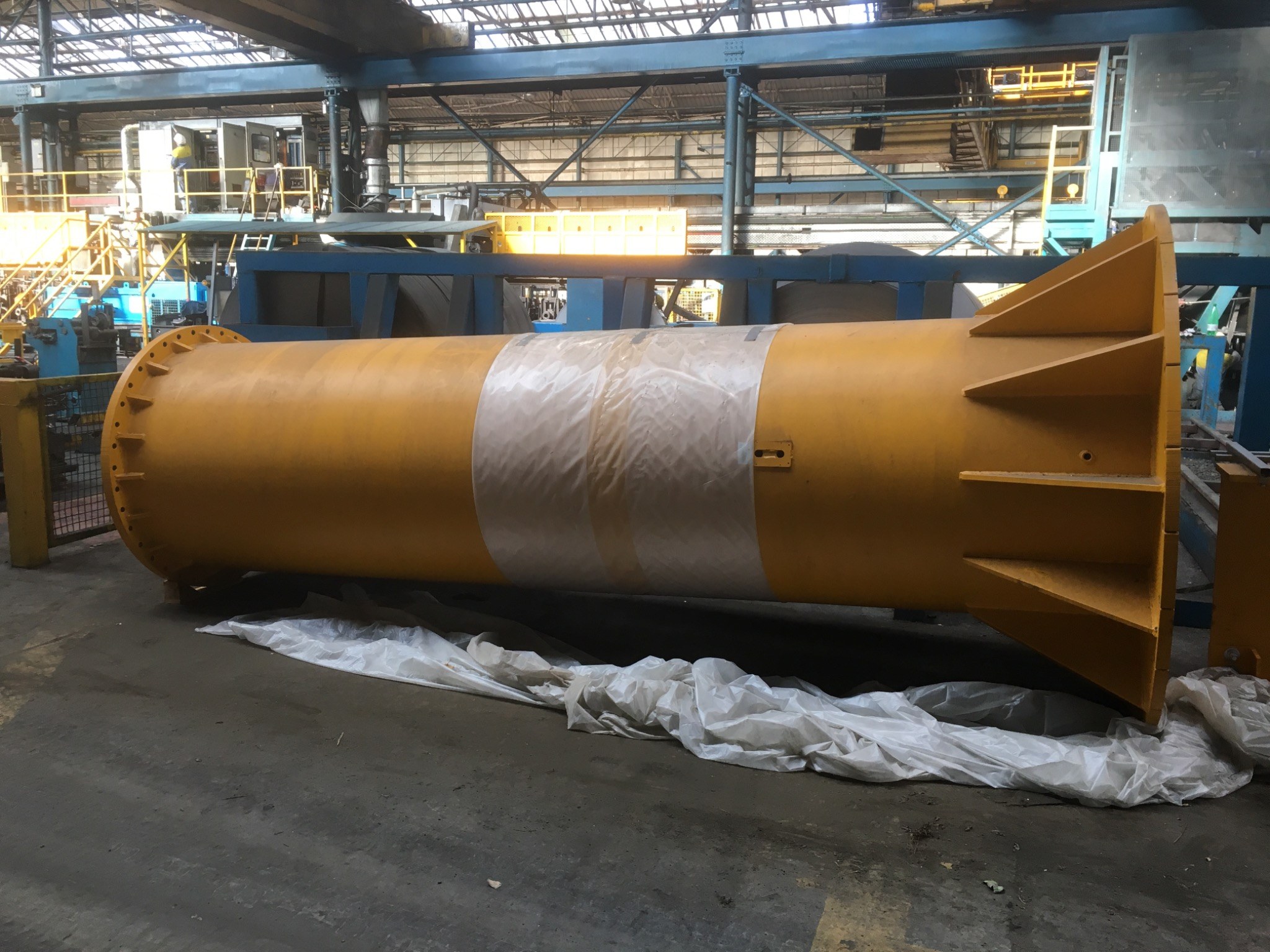
JSJ Construction was appointed by Tata Steel UK Limited to deliver the civil engineering works for a new 10-tonne overhead crane foundation inside an existing manufacturing facility in Corby.
The site presented a demanding mix of structural, access and programme constraints. The foundation had to be built in a tightly confined area surrounded by operational machinery and structural steelwork, with restricted headroom and all access through a single roller-shutter doorway. Every stage of the work, from breakout to final concrete, had to be completed within the client’s two-week summer shutdown.
SCOPE OF WORKS
BREAK OUT AND EXCAVATION
Break out existing reinforced concrete floor within the foundation footprint
Excavate to 1.2m below floor level
Create working clearance for the piling rig inside the building
Remove all arisings through the single roller-shutter access
MINI-PILING
Mini piling rig selected for restricted headroom
Four in-situ reinforced concrete piles
Approximately 12 to 15m depth to natural ground and bedrock
Piles positioned to suit the crane column loading
TESTING AND VERIFICATION
Integrity testing on all four piles before pile-cap construction
Concrete cube testing to confirm early strength
Verification completed within the shutdown programme
Sign-off before committing to the next stage
REINFORCED PILE-CAP
Heavily reinforced pile-cap assembled within the excavation
Pile connections and crane-base interface steelwork incorporated
Approximately 60m³ of specialist fast-track concrete
Required early strength achieved within three days
THE CHALLENGE
This was a deep-piled structural foundation constructed inside a working factory, not a routine slab. All plant, materials, personnel and excavated arisings had to pass through one roller-shutter doorway, and the working area was enclosed by fixed equipment that left no room for conventional plant.
Sequencing was everything. Plant selection, deliveries, temporary segregation, excavation, piling, reinforcement and concrete placement all had to be coordinated around the physical limits of the building and a fixed shutdown window that could not move.
THE RESULT
The complete foundation was handed over within the two-week shutdown. A specialist fast-track concrete achieved the required early strength within three days, removing the conventional curing period from the critical path and allowing the crane installation to follow immediately.
The new 10-tonne crane is now in operation, and the facility returned to production on schedule. The project demonstrates JSJ’s ability to plan and deliver technically demanding works where access, space, live operations and programme are all critical.